
English| EUR
Suggested for you
More currencies
Choose a language
A felucca ride between Luxor and Aswan covers roughly 200 kilometers of the Nile, typically taking two to three days depending on wind conditions and the number of stops. This traditional sailing experience follows the river's path through villages, agricultural land, and desert landscapes that have defined Upper Egypt for millennia.
Quick answer
The felucca ride Luxor to Aswan journey typically takes two to three days, covering approximately 200 kilometers of the Nile River. Most trips include overnight stops on islands or riverbanks, with sailing dependent on wind conditions. The route is available year-round, though cooler months from October through March offer more comfortable conditions for multi-day river travel.
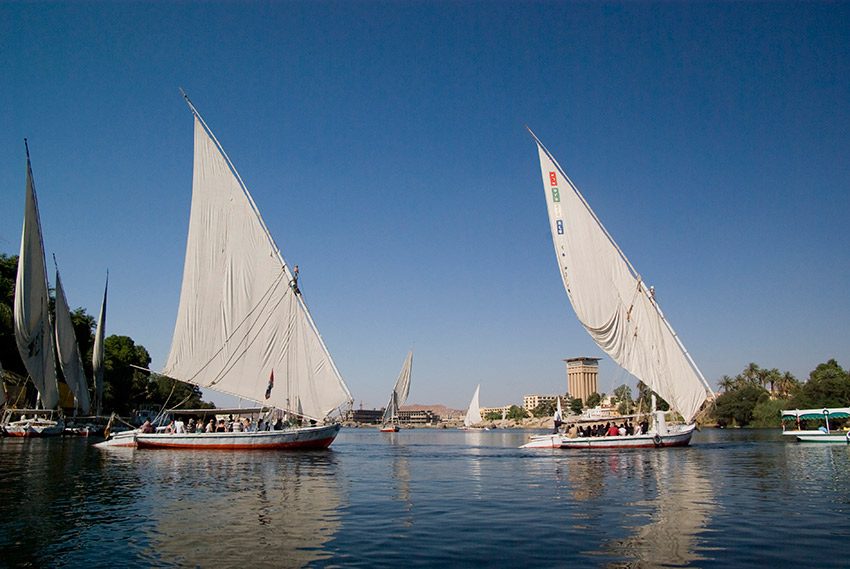
Feluccas have moved cargo, people, and ideas along the Nile for over four thousand years using the same triangular sail design visible today. The journey downstream from Luxor to Aswan follows prevailing northerly winds that make the route faster than the return trip, though captains still work with currents, seasonal breezes, and the river's shifting channels. Most travelers arrange private charters with local operators based along the Corniche in either city, negotiating terms that include crew, meals, and sleeping arrangements directly on deck or at designated stopping points. The Nile between these two cities narrows and widens through stretches of cultivation where water wheels still turn and farmers work plots that flood each year. Feluccas moor at sandy banks after sunset, with crews preparing simple meals over portable stoves while passengers sleep under open sky or canvas awnings. Daytime sailing passes temple ruins visible from the water, villages where children wave from mud-brick homes, and long stretches where the only sound is canvas snapping in the wind. The pace is slow enough to watch egrets fish in shallows and fast enough to cover significant distance when conditions align. This traditional Nile sailing route lacks the controlled schedules of motorized vessels. Wind may die for hours, requiring crew to row or pole through calm sections. Sandbanks shift position each season, demanding local knowledge to navigate safely. The experience appeals to travelers prioritizing immersion over efficiency, willing to accept variable conditions in exchange for traveling as Egyptians have for centuries. Captains typically speak functional English and carry basic provisions, though passengers often supplement supplies before departure. The felucca ride Luxor to Aswan guide approach differs fundamentally from cruise itineraries. There are no cabins, air conditioning, or fixed meal times. Washing happens in the river. Sleeping bags or blankets provided by the crew serve as bedding. The trade-off is direct contact with the river's rhythms, unmediated by engines or glass, and arrival in Aswan having covered the distance under sail and current alone.
“Wind may die for hours, requiring crew to row or pole through calm sections, demanding local knowledge to navigate safely.”
Most felucca journeys from Luxor to Aswan span two to three days, covering roughly 100 kilometers of the Nile with overnight camping on riverbanks. This unhurried pace suits travelers seeking a traditional sailing experience with stops at riverside temples and Nubian villages.
Board your felucca at the Luxor waterfront and settle in as the crew hoists the triangular sail. The first hours pass through irrigated farmland and date-palm groves, with the current carrying you south.
Many captains anchor near Esna or small farming settlements where you can walk through fields or visit a local market. Expect 30 to 60 minutes on shore before continuing downstream.
As daylight fades, the crew moors along a sandy bank and prepares a simple meal over a fire—typically rice, vegetables, and flatbread. You sleep on deck under blankets or in the open air.
The felucca glides past Edfu, home to the Temple of Horus; some itineraries include a brief stop, though many save temple visits for a separate land tour. The river narrows here, and you may share the channel with larger cruise ships.
Crews often pause at Kom Ombo for a short walk to the hilltop temple dedicated to Sobek and Horus. Allocate 45 minutes for the climb and a quick look at the reliefs.
Another bankside camp, this time closer to Aswan; the landscape becomes rockier and the desert presses nearer to the water. Expect cooler temperatures as you move south.
You reach Aswan's waterfront by mid-morning, disembarking near the corniche or the islands. The entire journey covers two full days and parts of a third, depending on wind and current.
The period between October and April offers the most temperate conditions for a journey along the Nile. Planning your trip during these months avoids the intense heat of the Egyptian summer while ensuring favorable wind patterns for felucca travel.
Cooler, mild temperatures 15°C to 25°C
This season provides the most comfortable climate for extended time on the water. Peak visibility and steady winds characterize these months.
Extreme heat often exceeding 38°C
High temperatures make daytime travel difficult. Seek early or late hours if traveling during this period.
Mild temperatures during sunset
This best arrival window offers optimal lighting for photography and cooler temperatures during sunset.
Verdict: The best time for a felucca ride is between October and April, specifically utilizing the arrival window of 16:00–18:00.
The sailing points for felucca journeys are located along the Nile River Corniche in both Luxor and Aswan. Visitors can reach these riverfront areas easily via local transport or by walking from central city locations.
Travel to Nile River Corniche via local taxi
Walk to the Corniche from Luxor or Aswan city center
Private transfer to Nile River Corniche
The optimal arrival window is 16:00–18:00 to align with favorable sailing conditions. As there is no formal entrance fee, head directly to the designated piers along the Nile River Corniche to meet your operator.
Multi-day felucca trips require specific preparation for life on a traditional wooden sailboat without modern facilities.
Everything you need to know about felucca ride luxor to aswan
Facilities on these vessels are minimal, as feluccas are traditional boats without cabins, bathrooms, or running water. Your captain will typically coordinate stops at local guesthouses or designated areas along the riverbank for bathroom access and washing. It is important to confirm these logistics with your guide so you know exactly how the daily routine will function. Embracing the rustic nature of the journey is part of the experience for those choosing this mode of river travel.